What are Binding Agreements?
Binding agreements are formal commitments between global trade unions or worker representatives and groups of multinational companies to address specific labour rights issues, often within a particular sector, region, or jurisdiction. The binding agreement model is not new—certain binding agreements date back many years—and has proven more effective in securing meaningful outcomes for workers compared to other models, such as voluntary corporate social audits.
Key Differences Between Social Audits and Binding Agreements
| Characteristic | Social Audits | Binding Agreements |
| Legal accountability | No legal consequences for auditing failures | Legally binding on all parties (often binding arbitration) |
| Market consequences | No clear market consequences for auditing failures | Explicit market consequences for non-compliance |
| Governance and independence | Commercial relationship between auditee and auditor | Workers participate in governance |
| Grievance and remedy | Generally absent or ineffective | Remedy is built in |
| Monitoring, reporting and transparency | Generally one-off auditing; results typically opaque | Continuous monitoring, more transparent reporting |
Note: There are variations between different social audit schemes and types of binding agreements. The table represents a summary of general characteristics.
Source: Investor Guidance and Expectations: Supply Chain Due Diligence and Binding Agreements
Mitigating Risks and Securing Meaningful Outcomes
This portal showcases examples of binding agreements from around the world across various industry sectors. It is designed as a practical tool to support investors in engaging companies on supply chain due diligence and advancing respect for fundamental labour rights.
For more information on how binding agreements can help mitigate risks for companies and their investors while strengthening human rights due diligence (HRDD), see our publication: Investor Guidance and Expectations: Supply Chain Due Diligence and Binding Agreements
Table of Contents
- The International Accord for Health and Safety in the Textile and Garment Industry
- The International Bargaining Forum (IBF)
- Action, Collaboration, Transformation (ACT)
- Dindigul Agreement
- Lesotho Agreements
- Fair Food Program (FFP)
- The Central Java Agreement for Gender Justice
- ASOS/ITF Human Rights Due Diligence Agreement
The International Accord for Health and Safety in the Textile and Garment Industry
Sector: Garment and Textiles
The International Accord promotes worker health and safety in the textile and garment industry through independent factory inspections, remediation, safety training programs and complaint mechanisms, with corporate accountability underpinned by binding arbitration. It evolved from the Accord on Fire and Building Safety in Bangladesh, signed in 2013 after the Rana Plaza collapse. In December 2022, the Accord expanded its program to Pakistan.
- Year: 2013 (renewed in 2018 and 2023)
- Jurisdiction: Bangladesh and Pakistan
- Signatories: Over 250 global brands and two global union federations (IndustriALL Global Union and UNI Global Union)
- Governance/oversight: The International Accord is governed by a 15-member Steering Committee, including brand and trade union representatives. Witness signatories participate as observers, and the ILO as an independent Chair
The International Bargaining Forum (IBF)
Sector: Marine transportation
The IBF is a forum for collective bargaining that brings together international maritime employers, represented by the Joint Negotiating Group (JNG), and seafarers’ unions, represented by the International Transport Workers’ Federation (ITF). Every four years, the IBF convene to negotiate the IBF framework agreement. It addresses working conditions, quality of life, and wages. This framework serves as an instrument for ITF-affiliated unions to negotiate local agreements with companies in their countries.
- Year: 2003
- Jurisdiction: International
- Signatories: The JNG (the International Maritime Employers’ Council – IMEC, the International Mariners Management Association of Japan – IMMAJ, the Korean Shipowners’ Association – KSA, and a Taiwanese shipping company), and the ITF

Action, Collaboration, Transformation (ACT)
Sector: Garment and textile
ACT is an initiative based on a Memorandum of Understanding (MoU) between IndustriALL Global Union and multinational brands and retailers in the garment and footwear industry, designed to support a pathway to living wages through brand-supported collective bargaining in production countries. In 2024, ACT facilitated the establishment of individual binding agreements (“Cambodia Agreements”) between IndustriALL and brands to support collectively bargained wages in the Cambodian garment sector.
- Year: 2024
- Jurisdiction: Cambodia (for the Collective Bargaining Agreement); Netherlands (for the Cambodia Agreements)
- Signatories: Cambodia Agreements: 13 global brands and IndustriALL Global Union
- Governance/oversight: The ACT initiative is governed at parity by the corporate signatories (50%) of the ACT MoU and local and global trade unions through IndustriALL Global Union (50%) to jointly implement the MoU and subsequent decisions to operationalize it.
Resources:
- A New Model for Supply Chain Industrial Relations in Cambodia, by The Global Deal.
- Video – Supply chain change: Collective Bargaining Agreements build trust in Cambodia’s garment sector
Dindigul Agreement
Sector: Garment and textile
The Dindigul Agreement aims to end gender and caste-based violence and harassment (GBVH) at Eastman Exports factories in Dindigul, Tamil Nadu, India. It creates a framework that empowers workers to exercise their collective power to identify, report, remediate, and prevent GBVH in the workplace.
- Year: 2022
- Jurisdiction: India
- Signatories: Three global brands, the supplier Eastman Exports, trade unions (Tamil Nadu Textile and Common Labour Union – TTCU), and labour organizations (Asia Floor Wage Alliance – AFWA, and Global Labor Justice – GLJ)
- Governance/oversight: The execution of the Dindigul Agreement is overseen by an Oversight Committee comprising an independent gender and labour rights expert, representatives from TTCU, AFWA, GLJ, Eastman, and up to two signatory fashion companies
Resource: Official final assessment of the Dindigul Agreement – “The Dindigul Agreement to End Gender-based Violence and Harassment. Has it Worked?” by Global Labor Institute, Cornell University
Lesotho Agreements
Sector: Garment and Texile
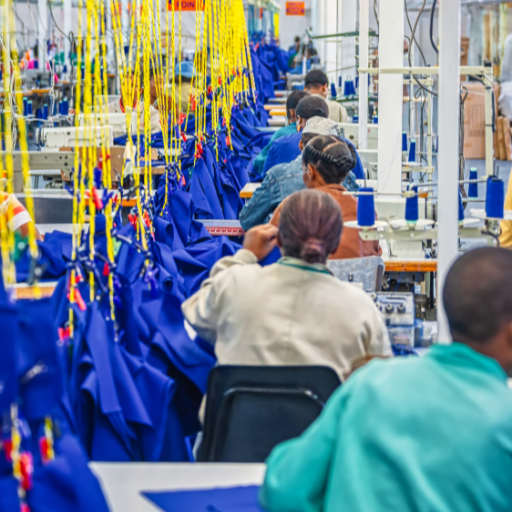
The Lesotho Agreements combat GBVH at five factories owned and operated by Nien Hsing Textile Co. in Lesotho. Consequently, the Anti-GBVH Program was established in 2020 to ensure a safe workplace free of GBVH at Nien Hsing factories.
- Year: 2019
- Jurisdiction: Lesotho
- Signatories: Three global brands, the supplier Nien Hsing, Lesotho-based trade unions and women’s rights organizations (Federation of Women Lawyers in Lesotho, Women and Law in Southern Africa Research and Education Trust – Lesotho, the Independent Democratic Union of Lesotho, the National Clothing Textile and Allied Workers Union, and United Textile Employees), and labour organizations (Solidarity Center, Worker Rights Consortium and Workers United)
- Governance/oversight: The Workers Rights Watch (WRW) was established in 2021 as an independent monitoring organization to oversee the implementation of the Anti-GBVH Program
Fair Food Program (FFP)
Sector: Agriculture
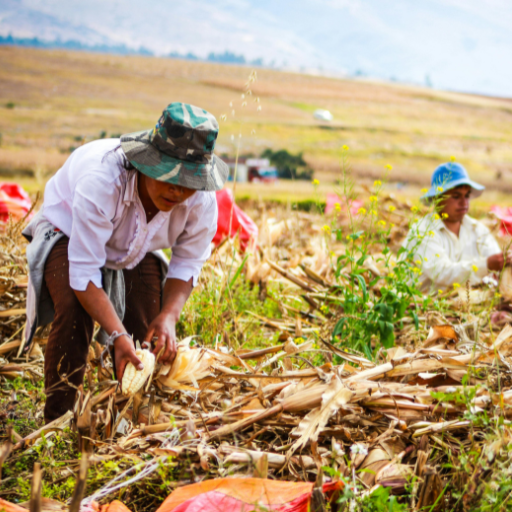
FFP brings together growers, farmworkers, and retail food companies to ensure better wages and working conditions for farmworkers. The initiative centers on a Code of Conduct applicable to participating growers, a price premium paid by purchasing companies to support wage increases, and binding agreements between brands and the Coalition of Immokalee Workers (CIW). Notably, CIW’s 2005 Fair Food Agreement with Taco Bell was the first of its kind — a legally binding agreement between a brand at the top of the food supply chain and the workers at the bottom of the supply chain. All Fair Food agreements also require brands to preferentially purchase from participating growers who are in good standing (with standing determined by the worker organization or by an auditor of the workers’ choosing) and, importantly, to suspend purchases from any growers who are suspended from the FFP for failures to comply with the Code of Conduct.
- Year: 2011
- Jurisdiction: United States, United Kingdom, South Africa, Chile
- Signatories: In the original US program, 14 buyers and approximately 40 growers participate in the FFP. The CIW signs binding agreements with buyers.
- Governance/oversight: The Fair Food Standards Council (FFSC) is an independent body that monitors the program’s implementation.
The Central Java Agreement for Gender Justice
Sector: Garment and Textile
- Year: 2024
- Jurisdiction: Indonesia
- Signatories: Two suppliers (PT Batang Apparel Indonesia and PT Semarang Garment Indonesia, owned by Ontide), four Indonesian unions (SPN, SPSI, and KASBI at PT Batang Apparel Indonesia, and SPSI at PT Semarang Garment Indonesia), a global supply chain buyer (Fanatics Brands), and labour organizations (Asia Floor Wage Alliance, Global Labor Justice, and Worker Rights Consortium)
- Governance/oversight: Each factory has a GBVH Elimination Committee, equally composed of union‑appointed worker representatives (a majority of whom are women) and management. These committees oversee the implementation of the Agreement, coordinate investigations, and issue remediation recommendations.
Resource: Fact Sheet: Central Java Agreement for Gender Justice, by the Worker Rights Consortium (WRC)
ASOS/ITF Human Rights Due Diligence Agreement
Sector: Transport and logistics
ASOS signed a legally binding human rights due diligence agreement with the International Transport Workers’ Federation (ITF), extending its commitments to cover transport and logistics in its global supply chain. The agreement commits ASOS and the ITF to collaborate on developing policies, identifying and mitigating risks, and determining remedies when rights are violated.
- Year: 2025
- Jurisdiction: International
- Signatories: ASOS and ITF
- Governance/oversight: ASOS and the ITF will set up a joint technical working group, meeting twice a year to work together on fulfilling the shared responsibilities and objectives of the agreement.